
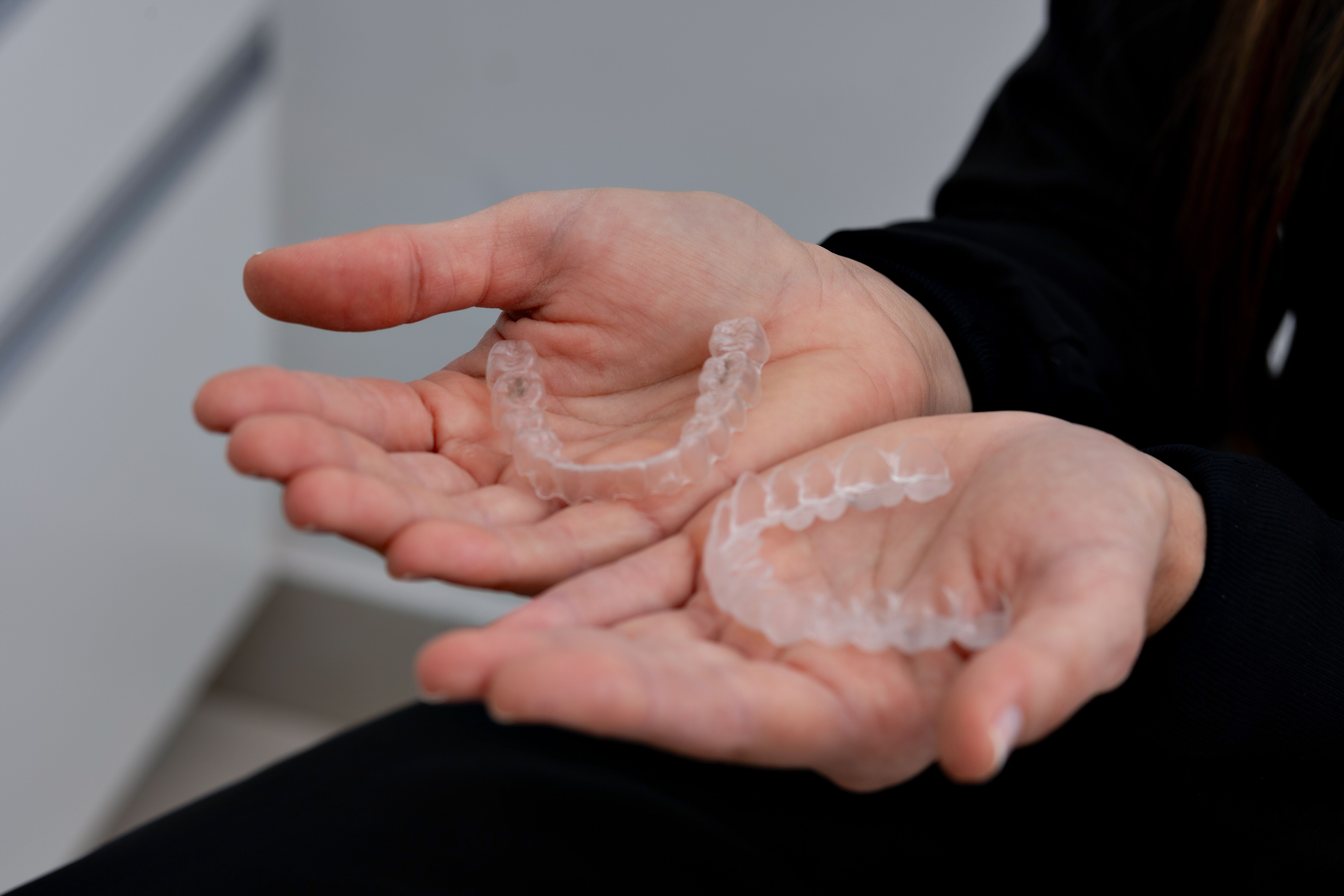
Why aligners sometimes need trimming
Clear aligners are custom made to fit your teeth, but small variations can happen. You may notice:
- A sharp edge
- A rough corner
- A small overhang
- Pressure on the gumline
- Irritation on the cheek or tongue
These issues are usually minor and easy to fix at home.
When it is safe to trim your aligners
You can safely trim your aligners if:
- The edge is slightly sharp
- A small corner is rubbing your gum
- A tiny piece of plastic is sticking out
- The discomfort is mild and localised
Trimming should only remove the smallest amount needed to smooth the area.
When you should not trim your aligners
Avoid trimming if:
- The aligner is cracked
- A large section feels uncomfortable
- The aligner does not fit properly
- The discomfort is severe
- The aligner feels too tight or too loose
In these cases, speak to a Toothfairy dentist for guidance.
How to trim your aligners safely
Step 1: Clean your aligner
Rinse it with warm water and gently brush it to remove any debris.
Step 2: Identify the problem area
Look for the exact spot causing irritation.
Step 3: Use small nail scissors
Choose curved nail scissors for better control.
Step 4: Trim a tiny amount
Cut only 1 to 2 millimetres at a time. Small adjustments make a big difference.
Step 5: Smooth the edge
Use a clean nail file to gently smooth the trimmed area.
Step 6: Test the fit
Place the aligner back in your mouth and check for comfort.
Tools you can use to trim aligners
What not to use when trimming aligners
Avoid:
- Kitchen scissors
- Craft knives
- Razor blades
- Clippers
- Hot tools
These can damage the aligner or create uneven edges.
Why trimming works
Trimming removes excess plastic that may rub against the gums or cheeks. Because aligners are thin and flexible, even a tiny adjustment can improve comfort significantly.
How to prevent aligner irritation
Wear aligners consistently
Your mouth adapts faster when aligners are worn full time.
Use dental wax
Apply a small amount to any rough area.
Keep aligners clean
Debris can make edges feel sharper.
Switch aligners on schedule
New aligners may feel different, but discomfort usually settles quickly.
When to speak to a Toothfairy dentist
You should seek advice if:
- The aligner cracks
- Trimming does not help
- The irritation becomes painful
- The aligner does not fit properly
- You are unsure how much to trim
Dentists can assess your photos and guide you through the next steps.
How Toothfairy helps
Virtual aligner support
Upload photos and get quick advice from a UK dentist.
Fit checks
Dentists confirm whether your aligner is fitting correctly.
Comfort tips
Personalised guidance to reduce irritation.
Emergency help
Fast support if your aligner becomes damaged.
Your aligner trimming questions answered
Is trimming safe
Yes, when done carefully.
Can trimming affect results
Not if you remove only a tiny amount.
Should I file the edges
Yes, gently.
Do I need a dentist
If trimming does not solve the issue.