What’s the Difference?
Many patients look into clear aligners because their teeth appear crooked — but sometimes the real issue isn’t the teeth themselves, it’s the bite. Two of the most common bite problems are overjet and overbite. They sound similar, and people often use the terms interchangeably, but they’re not the same condition.
Understanding the difference helps you choose the right treatment and get a straighter, healthier smile.
What Causes Overjet and Overbite?
Both conditions fall under the category of malocclusions — the orthodontic term for a “bad bite,” where the upper and lower teeth don’t fit together correctly.
Common causes include:
- Genetics (jaw size, jaw position, tooth shape)
- Underdeveloped lower jaw
- Thumb sucking or dummy use in childhood
- Tooth loss
- Crowding or spacing issues
- Trauma or cracked teeth
- Abnormal jaw growth
If one or both parents have an overjet or overbite, there’s a higher chance their children will develop one too.
Table: Overjet vs Overbite (At a Glance)
What Does an Overjet Look Like?
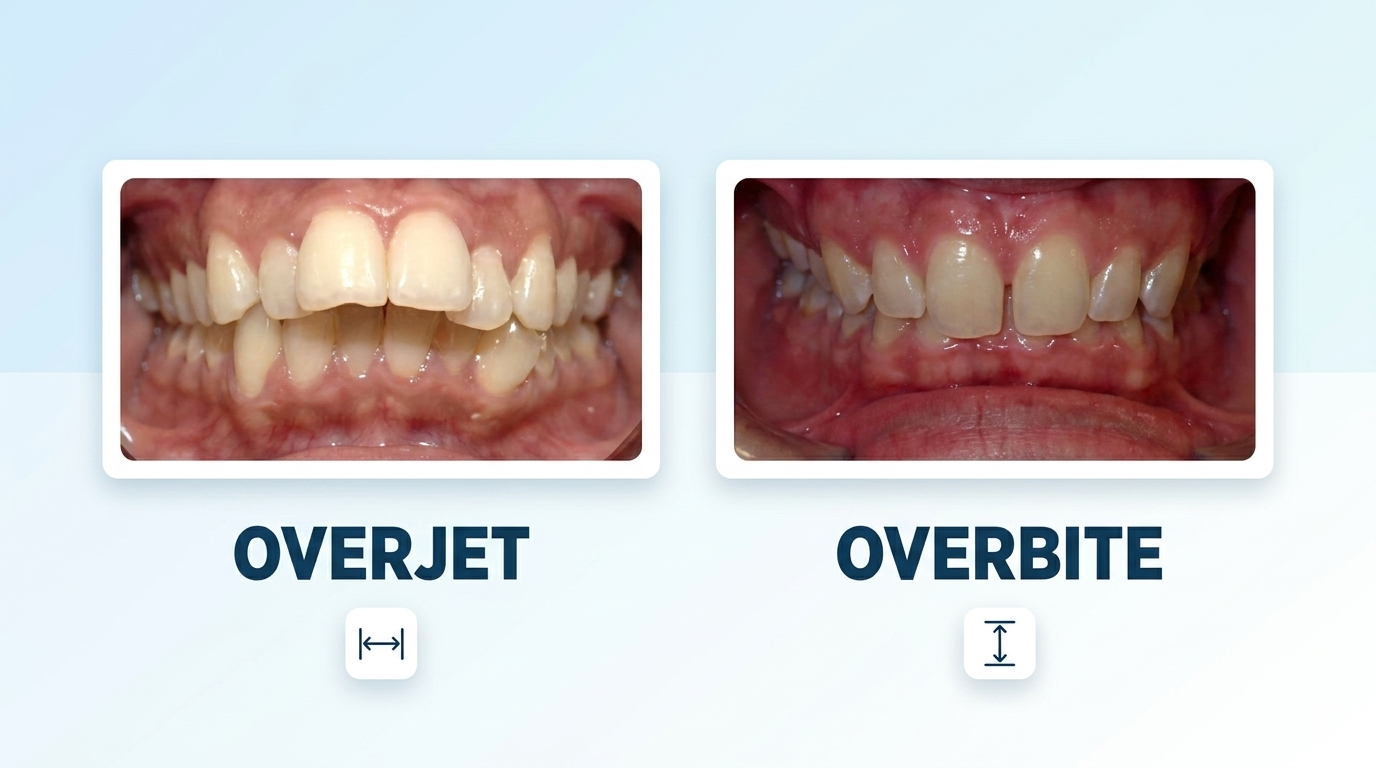
An overjet is when the upper front teeth protrude outward and sit noticeably ahead of the lower teeth. This is a horizontal issue.
Common signs of an overjet
- Upper teeth extend more than 2mm beyond the lower teeth
- Difficulty biting into foods
- Trouble closing lips fully
- Speech issues (e.g., lisping)
- Increased risk of biting the tongue or cheeks
- Jaw discomfort
Mild overjets may be barely noticeable. Severe cases can affect appearance, function, and confidence.
What Does an Overbite Look Like?
An overbite is a vertical issue — the upper front teeth overlap the lower front teeth too much.
Common signs of an overbite
- Lower teeth barely visible when biting down
- Upper teeth cover more than 20–30% of lower teeth
- Lower teeth may bite into the gum behind upper teeth
- Jaw tension or discomfort
- Wear on lower teeth
A slight overbite is normal — but a deep overbite can cause long‑term dental problems.
Overjet vs Overbite: The Key Difference
Both conditions involve the upper teeth sitting in front of the lower teeth — but the direction is different:
- Overjet = horizontal protrusion
- Overbite = vertical overlap
In an overjet, the upper teeth stick out forward at an angle.In an overbite, the upper teeth sit downward over the lower teeth.
Treatment Options for Overjet and Overbite
The good news? Both conditions are highly treatable.
Treatment depends on:
- Age
- Severity
- Jaw position
- Tooth alignment
- Whether the issue is dental, skeletal, or both
Common treatment options include:
1. Clear Aligners (e.g., Toothfairy)
- Move teeth gradually into alignment
- Can correct mild to moderate overjet/overbite
- Discreet, removable, convenient
- Dentist‑supervised through the Toothfairy app
2. Braces
- Effective for complex bite issues
- Can move both teeth and jaw position
3. Growth Modification (for children)
- Used during growth spurts
- Includes headgear, Herbst appliances, Bionators
4. Tooth Removal
- Used when overcrowding pushes teeth forward
5. Jaw Surgery (severe cases)
- Reshapes the jaw
- Used when skeletal issues cannot be corrected with braces alone
Table: Treatment Options for Overjet vs Overbite
Talk to Toothfairy
If you’re unsure whether you have an overjet, overbite, or both, you can speak to a UK‑registered dentist through the Toothfairy™ app.
You’ll get:
- A free video consultation
- A personalised assessment
- A clear aligner suitability check
- A tailored treatment plan
Start your teeth‑aligning transformation today:https://www.toothfairyapp.co.uk/